Buying or selling a property is one of the biggest financial decisions most people will ever make. While the excitement of finding your dream home or accepting an offer is undeniable, the legal process that follows can seem overwhelming. This is where a conveyancing attorney plays a vital role.
Understanding the conveyancing process can help you prepare for each stage and avoid unnecessary delays.
What is Conveyancing?
Conveyancing is the legal process of transferring ownership of immovable property from one person to another. In South Africa, only an admitted conveyancing attorney may register the transfer of property at the Deeds Office.
The conveyancer acts as the central coordinator between the buyer, seller, estate agent, bond attorneys, banks, municipalities and the Deeds Office.
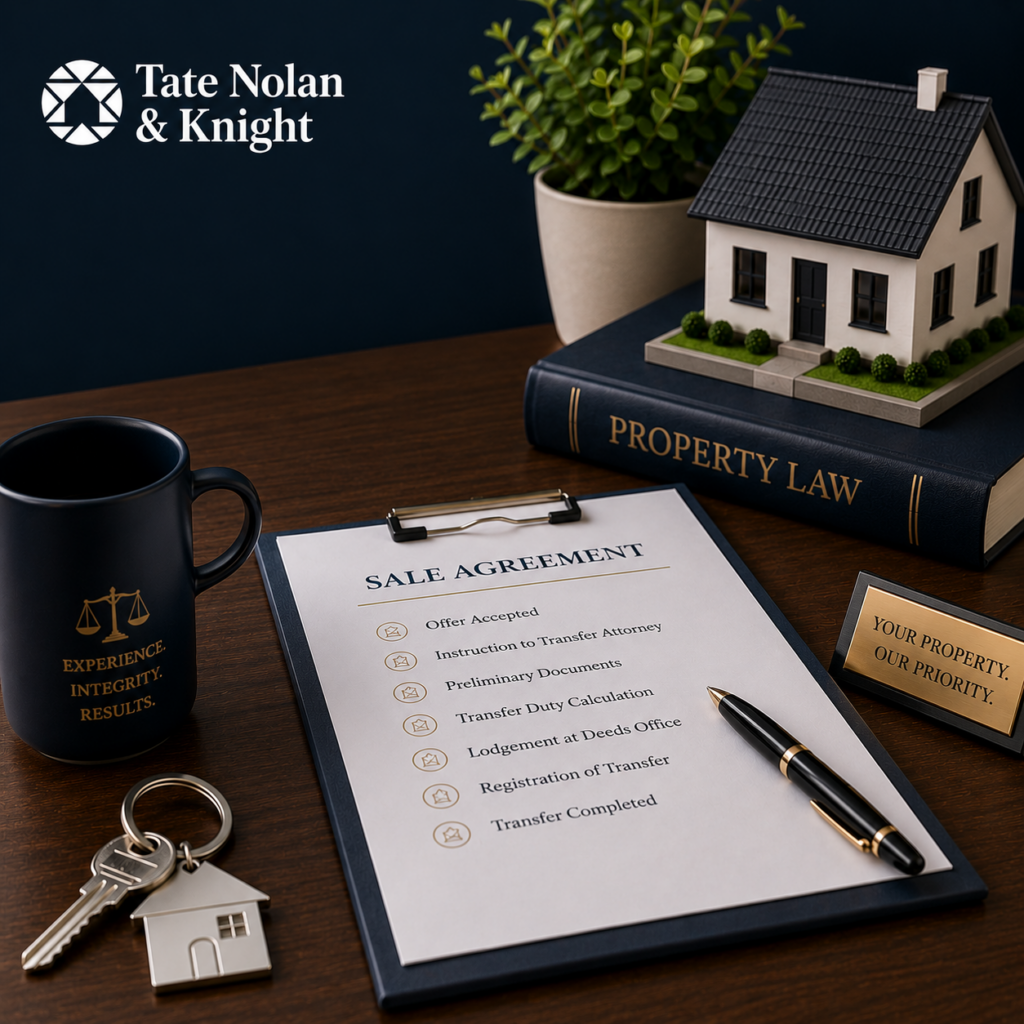
Step 1: The Offer to Purchase
The journey begins when the buyer and seller sign an Offer to Purchase (OTP). Once all conditions have been met, such as bond approval or the sale of another property, the agreement becomes legally binding.
The seller usually has the right to appoint the transferring attorney.
Step 2: Opening the Transfer File
The conveyancer receives the signed sale agreement and begins collecting all the necessary documentation. This may include:
- Identity documents
- Marriage certificates or antenuptial contracts (where applicable)
- Company or trust documents
- Rates clearance information
- Bond cancellation instructions (if applicable)
At this stage, the attorney also contacts all parties involved to ensure the transaction proceeds smoothly.
Step 3: Bond Approval
If the purchaser requires a home loan, the bank will assess the application. Once approved, the bank appoints bond registration attorneys to register the new mortgage bond.
If the seller still has an existing home loan, bond cancellation attorneys are appointed by the seller’s bank to cancel the existing bond.
These three sets of attorneys work closely together to ensure simultaneous registration.
Step 4: Obtaining Clearance Certificates
Before ownership can be transferred, several certificates must be obtained, including:
- Municipal Rates Clearance Certificate
- Levy Clearance Certificate (for sectional title properties)
- Electrical Compliance Certificate
- Electrical Fence Compliance Certificate (where applicable)
- Gas Compliance Certificate (if installed)
- Beetle Certificate (required in certain coastal regions)
Obtaining these certificates early can help prevent delays.
Step 5: Payment of Costs
The purchaser is generally responsible for paying:
- Transfer duty (if applicable)
- Transfer costs
- Bond registration costs
The seller is usually responsible for:
- Bond cancellation costs
- Compliance certificates
- Rates and levy clearances
Your conveyancer will provide detailed statements explaining each cost before payment is required.
Step 6: Lodgement at the Deeds Office
Once all documents have been signed and financial guarantees are in place, the transfer documents are lodged at the Deeds Office.
The Deeds Office examines every document to ensure all legal requirements have been met. This process typically takes between seven and ten working days, depending on the workload.
Step 7: Registration
When everything is approved, the transfer, bond cancellation and new bond registration are registered simultaneously.
On registration:
- Ownership officially passes to the purchaser.
- The seller receives the purchase proceeds.
- The purchaser becomes the legal owner of the property.
Congratulations—you’ve successfully completed the conveyancing process!
How Long Does Conveyancing Take?
Every transaction is unique, but a straightforward property transfer generally takes between six and twelve weeks from the date the conveyancer receives instructions.
Factors that may affect timing include:
- Delays in bond approval
- Outstanding municipal accounts
- Missing documentation
- Delays in obtaining compliance certificates
- Deeds Office processing times
How You Can Help Avoid Delays
Whether you’re buying or selling, you can help the process move smoothly by:
- Responding promptly to requests for documents
- Signing documents as soon as possible
- Paying requested costs without delay
- Keeping your contact details updated
- Asking questions whenever you’re unsure
Choosing the Right Conveyancing Attorney
An experienced conveyancing attorney does far more than process paperwork. They ensure your interests are protected, keep you informed throughout the transaction, coordinate multiple stakeholders, and work proactively to minimise delays.
Whether you’re purchasing your first home or selling an investment property, having an experienced legal team by your side makes the entire process significantly less stressful.
If you’re planning to buy or sell property, contact our conveyancing team for professional guidance every step of the way.